If you are asking yourself are lab diamonds a good investment, the answer depends entirely on whether you are looking at a bank statement or your future lifestyle. In my downtown Toronto studio, I often meet couples who feel an immense pressure to choose a natural stone simply for "security," fearing that a lab-grown diamond might eventually lose its value. It is a valid concern, especially when you want to make a wise choice for such a significant milestone in your life.
It's true that the market has changed, and I realize how confusing the "real versus fake" debate can be when you just want a beautiful ring. I promise to provide you with the honest truth about the 2026 jewellery market so you can stop worrying about resale charts and start focusing on what truly matters to you. We will explore the actual financial reality of lab-grown stones, the widening price gap in the GTA, and why many couples now view these gems as a "lifestyle investment" that offers more freedom for their budget and their vision.
• Understand why diamonds are typically depreciating assets rather than financial stocks, helping you realize that "investment" in jewellery is about more than just resale value.
• Discover if are lab diamonds a good investment by exploring the "lifestyle investment" trend where Toronto couples reallocate their savings toward travel or a home.
• Learn how choosing a custom, handcrafted setting from a local studio ensures your ring has the longevity and character that mass-produced pieces often lack.
• Find out why GIA or IGI certifications remain the gold standard for protecting the integrity and quality of your purchase in the 2026 lab-grown market.
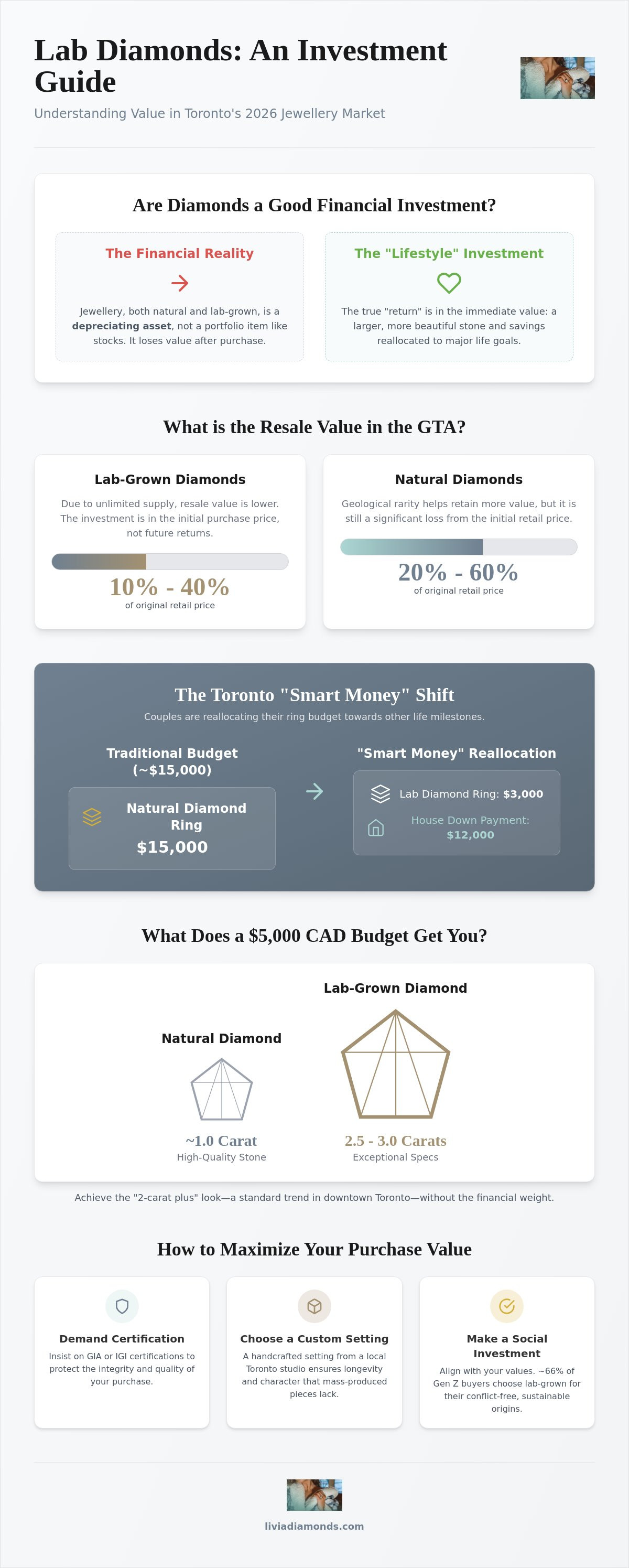
When clients visit my downtown Toronto studio, they often ask if are lab diamonds a good investment. To answer that clearly, we need to define what an "investment" actually looks like in the 2026 jewellery market. Most people think of investments as assets that grow in value, like stocks or real estate. However, jewellery is almost always a depreciating asset. While natural diamonds have historically been marketed as "stores of value," the truth is that neither lab-grown nor natural stones are likely to make you a profit when you sell them.
In the first half of 2026, we have seen a significant shift in the Canadian market. Prices for lab-grown stones have finally begun to stabilize after years of rapid decline. While prices for a 1-carat lab stone dropped by about 14.2% early in the year, the market is now reaching a production-cost floor. This means the wild fluctuations of the past are settling down. In my experience, a lab diamond is a purchase for your life, not your portfolio.
Many people in the GTA wonder if they can sell their stone later if their circumstances change. The reality of the secondary market is that it can be quite challenging for consumers. If you visit a pawn shop or try a private sale in Toronto, you might only recoup 10% to 40% of the original retail price for a lab-grown stone. I often tell my clients to be wary of "buy-back" myths. Many traditional retailers offer these programs, but they usually require you to spend twice as much on a new stone to "trade up," which isn't a true return on your money.
Natural diamonds do technically hold a higher percentage of their retail value, typically retaining between 20% and 60% on the secondary market. This is largely due to their geological rarity and the high costs associated with mining. To understand the difference, it helps to know what a lab-grown diamond is; it is a stone with the exact same chemical and physical properties as a mined one, but created in a lab. Because lab diamonds can be produced in unlimited quantities, they lack the scarcity that supports the higher resale prices of natural stones. However, since natural diamonds also lose a large chunk of their value the moment you leave the shop, the "security" they provide is often more psychological than financial.
Many couples visiting my downtown studio are shifting their perspective on what "value" really means. When asking if are lab diamonds a good investment, they aren't necessarily looking for a return on a future sale. Instead, they are looking at the immediate impact on their lives. In my experience, the "Smart Money" shift in Toronto is about reallocating a significant portion of the engagement ring budget. Rather than tying up $15,000 in a natural stone, they might spend $3,000 on a lab-grown diamond and put the remaining $12,000 toward a down payment on a home or a memorable wedding at a local GTA venue.
There is a distinct "Emotional ROI" when you don't have to compromise on your vision. In the 2026 Toronto jewellery market, the "2-carat plus" look has become a standard trend in the downtown core. Lab-grown diamonds allow you to achieve that breathtaking presence without the financial weight. I often tell my clients that the money saved on the stone is an investment in their future home or wedding; some even choose to explore Rolex Watches to mark the milestone with a high-end timepiece. It provides a sense of freedom that a more expensive, mined stone simply cannot offer.
The math for a typical budget in Toronto today is quite eye-opening. If you have approximately $5,000 CAD to spend, you are faced with two very different paths. That budget might secure a high-quality 1-carat natural diamond. However, that same $5,000 can often buy a 2.5 or even 3-carat lab-grown stone with exceptional specs. To maximize the value of your lab diamond, you should prioritize these higher colour and clarity grades. This allows you to realize a dream design that feels substantial and luxurious without the "security" of a mined stone's price tag.
For the modern Canadian consumer, the origin of a gemstone is a primary consideration. Research shows that approximately two-thirds of Gen Z buyers in 2026 choose lab-grown options specifically for their conflict-free nature. It is a social investment that aligns with the progressive values we see across the GTA. If you are curious about how these stones compare in person, you can book a private consultation to explore your options in a relaxed, educational setting.
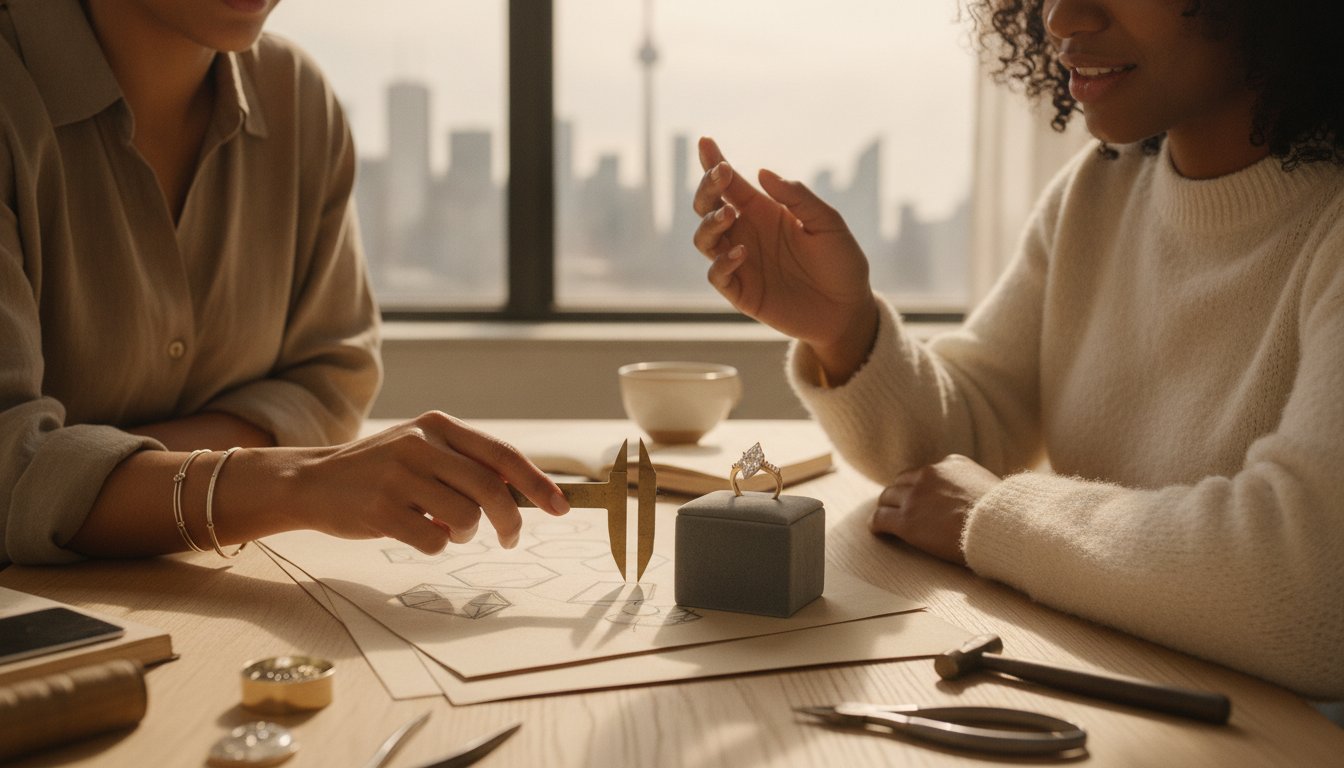
Once you realize that are lab diamonds a good investment in terms of your lifestyle and immediate savings, you can focus on where quality truly matters. To maximize the long-term value of your piece, you should redirect those savings into the craftsmanship of the ring itself. A high-quality, custom-designed setting does more than just hold a stone; it protects your purchase and ensures the ring remains a wearable piece of art for decades. In the 2026 Toronto jewellery market, the real value is found in the integrity of the build.
A grading report from IGI or GIA is non-negotiable. These documents verify the stone's 4Cs and provide essential peace of mind regarding its origin and quality.
Unlike mass-produced rings found in many GTA malls, a handcrafted setting from a local studio uses superior casting and finishing techniques.
Working with a specialist helps you avoid technical pitfalls like poor prong security. You can learn more about my background as a third-generation jeweller by reading about who is Aret and our commitment to the craft.
The greatest benefit of choosing a lab diamond is the ability to invest in a bespoke design. Because the stone is significantly more affordable, my clients often choose to add intricate hidden halos, personalized engravings, or more substantial bands that offer better longevity. A custom ring from Livia Diamonds is a beautiful reflection of your personal story. It is built specifically for your stone, ensuring a precision fit that mass-market settings simply cannot match.
When you visit our downtown studio, come prepared with questions about the durability of the design and the specific growth method of the diamond. You should feel comfortable asking about the integrity of the materials and the timeline for the handcrafted process. If you are curious about how we work together to bring your vision to life, I recommend checking out our guide on what to expect during your private session. This transparency is what builds confidence in such a meaningful purchase.
Determining if are lab diamonds a good investment for your life depends on your unique financial and emotional goals. We have explored how lab-grown stones allow Toronto couples to prioritize their future milestones while still achieving a stunning, high-quality look. The key is to shift the focus from resale charts to the tangible quality of a handcrafted piece that you will love for a lifetime.
By choosing a custom design and insisting on proper certification, you ensure your ring has the integrity and beauty it deserves. My goal as a third-generation jeweller is to provide a reassuring, one-on-one environment where you can explore these options without any pressure. Ready to see the brilliance for yourself? Book a free private consultation at our downtown Toronto studio to compare lab and natural diamonds side-by-side. It would be my pleasure to help you realize your vision with a piece created right here in the heart of the city.
Yes, a lab stone will pass a diamond tester because it is chemically identical to a mined one. When clients ask if are lab diamonds a good investment, I explain that their physical properties are exactly the same. A standard tester measures thermal or electrical conductivity, and since both stones are pure carbon, they react identically. You would need advanced laboratory equipment to tell them apart.
You can definitely insure your ring in Ontario. Most Canadian insurance companies provide full coverage for lab-grown jewellery based on its appraised replacement value. I recommend keeping your GIA or IGI certification safe, as this document is essential for your provider to realize the specific quality of your stone. It ensures your piece is protected against loss or damage across the GTA.
The lower price is a result of a much shorter supply chain and the absence of high mining costs. Natural diamonds are expensive because they are geologically rare and difficult to extract from the earth. Lab diamonds are grown using advanced technology that has become significantly more efficient in 2026. You are paying for the craftsmanship and technology rather than the geological scarcity of the stone.
No, these stones do not fade, cloud, or change colour over time. Because they share the same atomic structure as natural diamonds, they are incredibly durable and rank a 10 on the Mohs hardness scale. The sparkle you see on the day you pick up your custom ring in our Toronto studio is the same sparkle that will be there fifty years from now.

© Copyright 2023 Livia Diamonds. All Rights Reserved