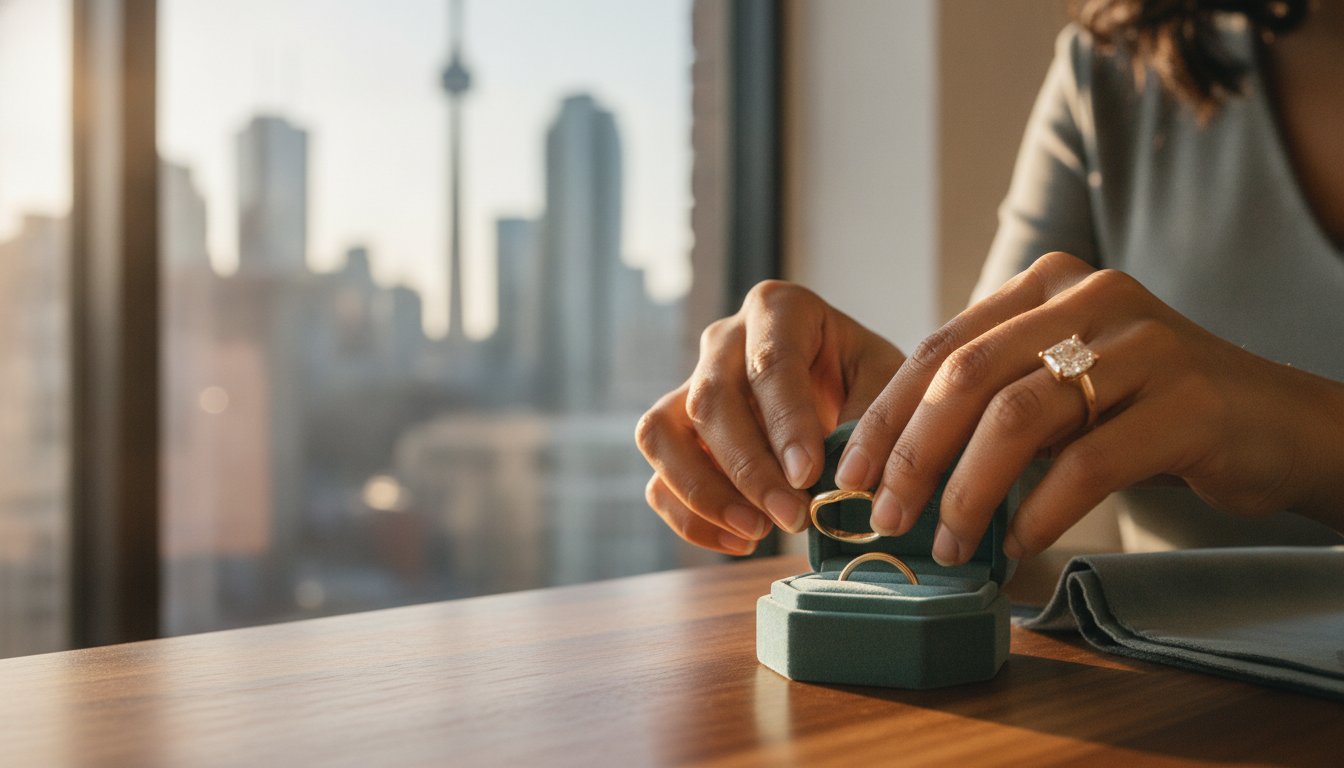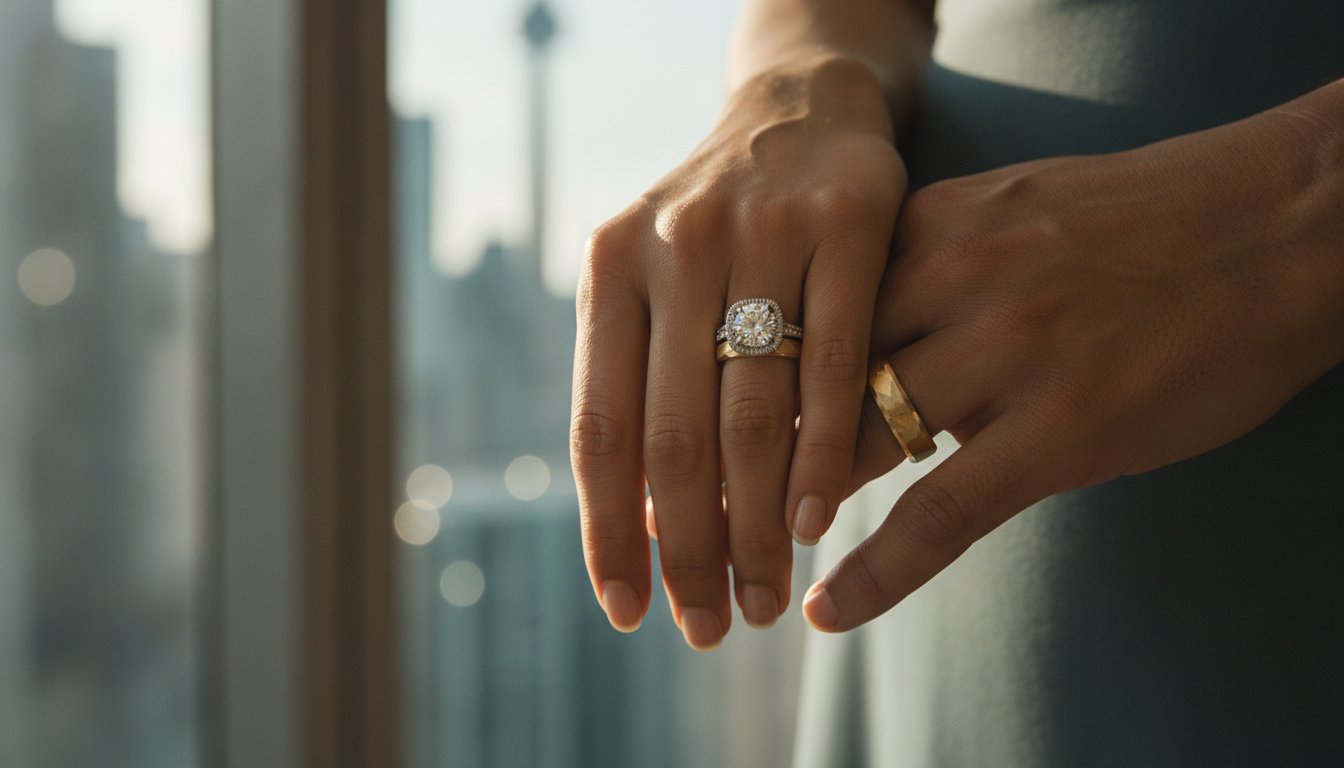
Imagine sitting at a family dinner in Yorkville, showing off your new engagement ring, when the inevitable question about its origin comes up. It's completely natural to feel a bit of anxiety about explaining lab grown diamonds to family, especially if you're worried about judgment or being misunderstood. You want your loved ones to see the same brilliance and ethical value that you do, rather than worrying they'll think you simply took a shortcut on such a significant symbol. In my experience working with couples at our downtown Toronto studio, I've found that the right approach can turn a potentially awkward conversation into a moment of shared pride.
You deserve to feel proud of your decision to prioritize both quality and conscience. While lab diamonds are chemically and physically identical to mined stones, the technical details can feel overwhelming to explain on the spot. This guide will show you how to bridge the gap between tradition and modern technology. We'll give you the confidence to explain the science, the incredible value, and the artisanal craftsmanship that makes your ring a modern masterpiece of Canadian jewellery. By the time you're finished reading, you'll be ready to lead these conversations with quiet confidence and clarity.
• Understand why older generations in the GTA often confuse lab diamonds with stimulants like Moissanite and how to gently address these misconceptions.
• Master the "ice cube" analogy to make explaining lab grown diamonds to family simple by showing how they share the exact same chemical DNA as stones from the earth.
• Learn how choosing lab-grown allows you to prioritize a larger centre stone or a superior cut, offering a value proposition that is hard to ignore.
• Discover why 100% traceable origins and ethical peace of mind are becoming the leading standard for modern Toronto weddings in 2026.
• Find out how a custom design experience adds a layer of sentimental value that helps your family focus on the artistry and meaning of your ring.
When you're explaining lab grown diamonds to family, the first hurdle is often a simple case of mistaken identity. Many parents and grandparents in the GTA grew up in an era where any stone not pulled from a mine was automatically labelled a "simulant" like Cubic Zirconia or Moissanite. These materials are entirely different gemstones that only mimic the look of a diamond. In my experience, older relatives often equate "natural" with "authentic" because of decades of highly effective marketing that tied the two concepts together. They aren't trying to be difficult; they're simply operating on outdated information.
The 2026 reality is quite different. A lab-grown diamond is chemically, physically, and optically identical to one mined from the earth. To put it simply, the Federal Trade Commission (FTC) ruled that a diamond is a diamond regardless of its origin, as the growing process doesn't change the essential nature of the carbon structure. Whether it formed under the crust of the earth or in a specialized facility, the result is a Synthetic diamond that possesses the exact same hardness and brilliance as its mined counterpart.
One of the most common questions I hear at my downtown studio is whether the quality holds up under scrutiny. Lab-grown stones are graded on the exact same 4Cs scale as natural stones. This means they are evaluated for their cut, colour, clarity, and carat weight by the same gemological laboratories. In my experience, even a trained jeweller in a downtown Toronto centre cannot tell the difference between the two without highly specialized equipment. You can learn more about these specifics on our page about lab grown diamonds, which details how these stones achieve such high levels of purity.
The "fake" label persists because of the long history of diamond alternatives that didn't quite hit the mark. For earlier generations, anything "man-made" suggested a cheap imitation. However, in the 2026 Toronto market, lab-grown stones have become the standard for modern, bespoke design. They allow couples to focus on the artistry of the piece rather than the logistics of the mining process. Most clients find that once family members see the stone in person, the "fake" label disappears instantly, replaced by genuine awe at the sparkle.
If you want to see these stones side-by-side and feel more prepared for your family conversations, I invite you to a free private consultation at our downtown Toronto studio. We can walk through the technical details together so you feel completely confident in your choice.
When you're explaining lab grown diamonds to family, it's best to skip the complex chemistry and stick to relatable comparisons. In my experience, the "Ice Cube" analogy is the most effective tool for clarity. Think about ice from your freezer compared to ice from a frozen pond in High Park during a cold Toronto winter. Both are identical in every way that matters. They have the same chemical structure and the same physical properties; one just formed in a controlled environment while the other formed in nature. This simple comparison often helps relatives realize that "man-made" doesn't mean "imitation."
The science behind it is essentially about speeding up nature. Advanced processes recreate the exact conditions found deep within the earth. It is helpful to point out that even the FTC guidelines on diamond advertising emphasize that these are physically and chemically the same as mined stones. There are no substitutes or shortcuts involved in the crystal growth. For those who want to get into the granular details of the technology, our Livia Diamonds lab-grown guide offers a much deeper dive into the specific methods used today.
Every lab diamond begins with a "seed," which is a tiny sliver of a pre-existing diamond. Think of this seed as a biological blueprint. It carries the DNA of the crystal structure, guiding the new carbon atoms as they bond together. In a controlled Toronto-adjacent lab setting, we provide the intense heat and pressure required for that seed to grow into a full-sized rough diamond. It is a natural growth process, just accelerated by human innovation and precision.
Explain that carbon is the fundamental building block of all diamonds. Whether it comes from the ground or a lab, the atoms are arranged in the exact same crystalline way.
Reassure them that we use heat and pressure to grow the stone. There are no plastics or "fake" chemicals involved in the actual structure of the diamond.
Point out that your stone comes with a grading report from the GIA or IGI. These institutions only certify "real" diamonds, providing professional validation of your choice.
If you feel like you need a bit more practice with these concepts before the next family gathering, you can always book a private viewing at our studio. We can walk through these analogies together while looking at the stones in person so you feel completely prepared.
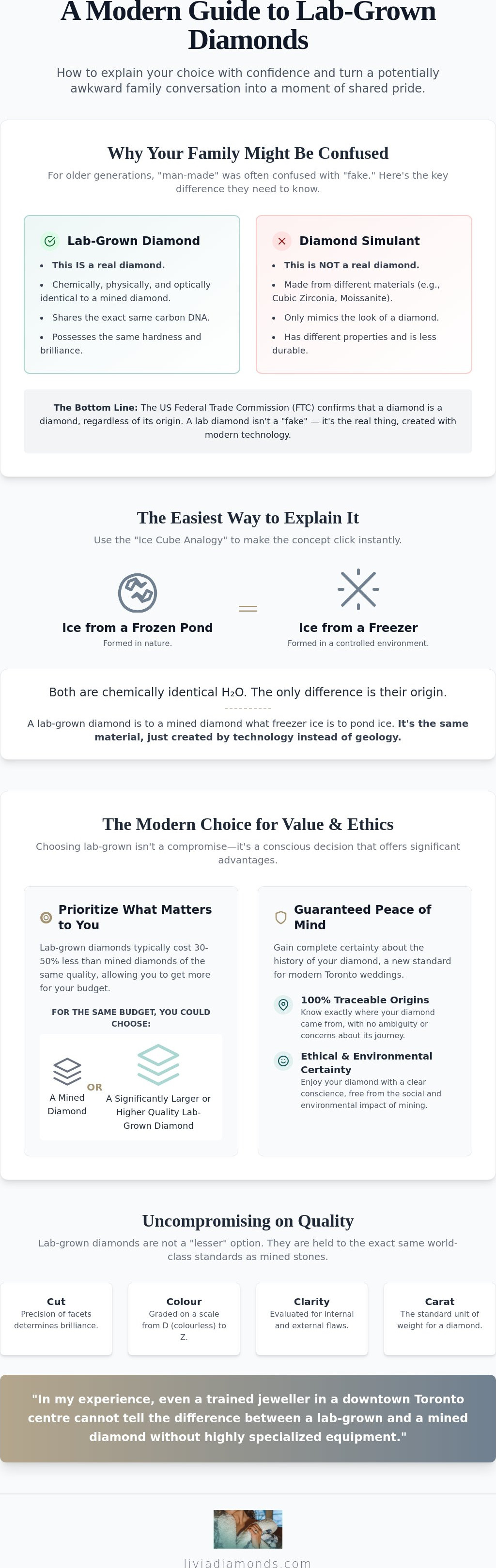
Many couples find that explaining lab grown diamonds to family becomes much easier when they focus on the specific reasons they chose the stone. In my experience, Toronto couples often choose lab-grown because it allows them to prioritize a higher-quality cut or a significantly larger centre stone. Instead of settling for a smaller mined stone with visible inclusions, you can opt for a breathtaking, eye-clean diamond that makes a statement. When family members see the brilliance and scale of the stone in person, the debate usually ends. The sparkle speaks for itself.
Ethical peace of mind is a major trend for GTA weddings in 2026. Many of our clients value a 100% traceable origin, which lab-grown stones provide by default. I often suggest framing the cost savings as a "smarter" financial move rather than a "cheaper" one. In a city like Toronto, where every dollar counts toward a home down payment, choosing a lab-grown stone is a practical decision that supports your long-term goals. It allows you to allocate more of your budget to a bespoke, handcrafted setting that will last a lifetime.
This is a common concern for parents who view jewellery as a financial safety net. I always suggest addressing this "investment" objection honestly. Engagement rings are sentimental heirlooms, not liquid commodities. Unless you're buying a rare, museum-grade diamond, most rings don't function like a savings account. By choosing lab-grown, you're investing in the beauty you'll see every day. This focus on heritage and craftsmanship is a core part of Aret’s story, reflecting a third-generation commitment to quality over speculative resale value.
One of the best ways to gain family acceptance is to involve them in the story of the ring's creation. Explain how you worked with a local Toronto jeweller to design a custom ring that reflects your partner’s unique style. When you describe the hours spent choosing the setting and the meticulous hand-finishing in our downtown studio, the origin of the carbon becomes secondary to the effort you put into the piece. The story of the ring is about your future together, not the geological age of the stone.
If you're ready to start your own design journey or want to see the quality of our stones for yourself, I invite you to a free private consultation at our downtown Toronto studio. We can discuss your vision and help you find the perfect balance of value and beauty.
Choosing a lab-grown diamond is a decision rooted in modern values, transparency, and practical wisdom. When it comes to explaining lab grown diamonds to family, remember that you're sharing a choice that prioritizes ethical traceability and world-class craftsmanship. By using simple analogies and focusing on the bespoke nature of your ring, you can shift the conversation away from outdated myths and toward the shared excitement of your future. In my experience, once your loved ones see the undeniable brilliance of a well-cut stone, any lingering doubts usually vanish.
At Livia Diamonds, we bring third-generation expertise and over 15 years of custom design in Toronto to every piece we create. We believe in a one-on-one educational approach that ensures you feel as confident in the studio as you do at the dinner table. If you are feeling unsure about your diamond choice, book a free private consultation at our downtown Toronto studio to see the brilliance of lab-grown stones in person. We are here to help you create a symbol of love that you'll be proud to share with your family for generations to come.
No, they are visually indistinguishable from mined stones. When you are explaining lab grown diamonds to family, you can reassure them that even under a loupe, the sparkle, fire, and scintillation are exactly the same. Because they share the same physical properties, they react to light in the identical way that has made diamonds the standard for engagement rings for centuries.
Never. A lab-grown diamond is a permanent, stable gemstone that won't lose its clarity or change colour as the years pass. Some older relatives might remember early simulants that degraded, but these are true carbon crystals. In my experience at our Toronto studio, I always emphasize that these stones are built for longevity and will remain just as brilliant for your 50th anniversary as they are today.
Not by looking at it through a standard magnifying glass. Even a master jeweller in a downtown Toronto centre cannot distinguish the two without specialized laboratory equipment designed to detect growth patterns. Every stone we provide is laser-inscribed with a microscopic report number, which is the only way to be certain of its origin without advanced testing.
Not at all. Transparency is a hallmark of modern GTA weddings, and many couples feel that explaining lab grown diamonds to family is a way to share their commitment to ethical and financial responsibility. In my experience, family members appreciate the honesty and are often impressed by the technology. It isn't about the price; it's about making a choice that aligns with your vision for a custom, handcrafted piece.

© Copyright 2023 Livia Diamonds. All Rights Reserved