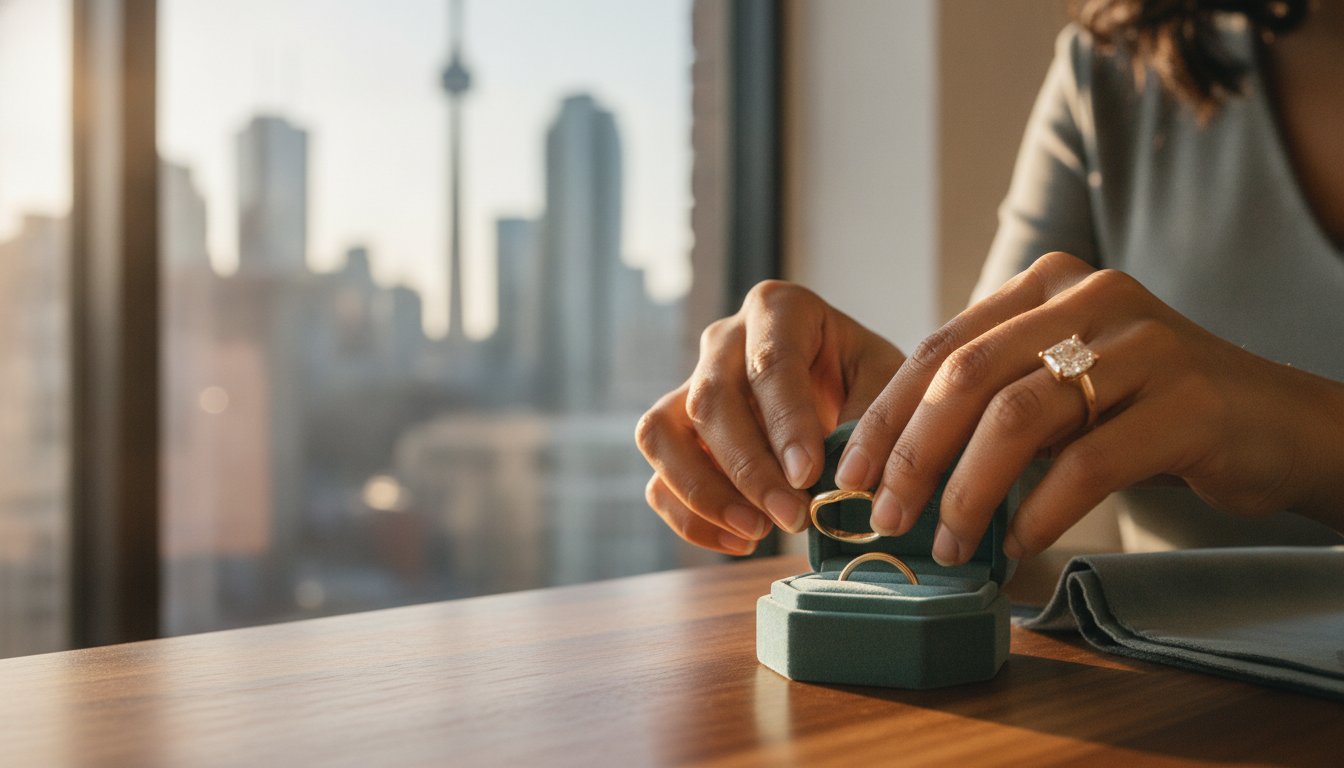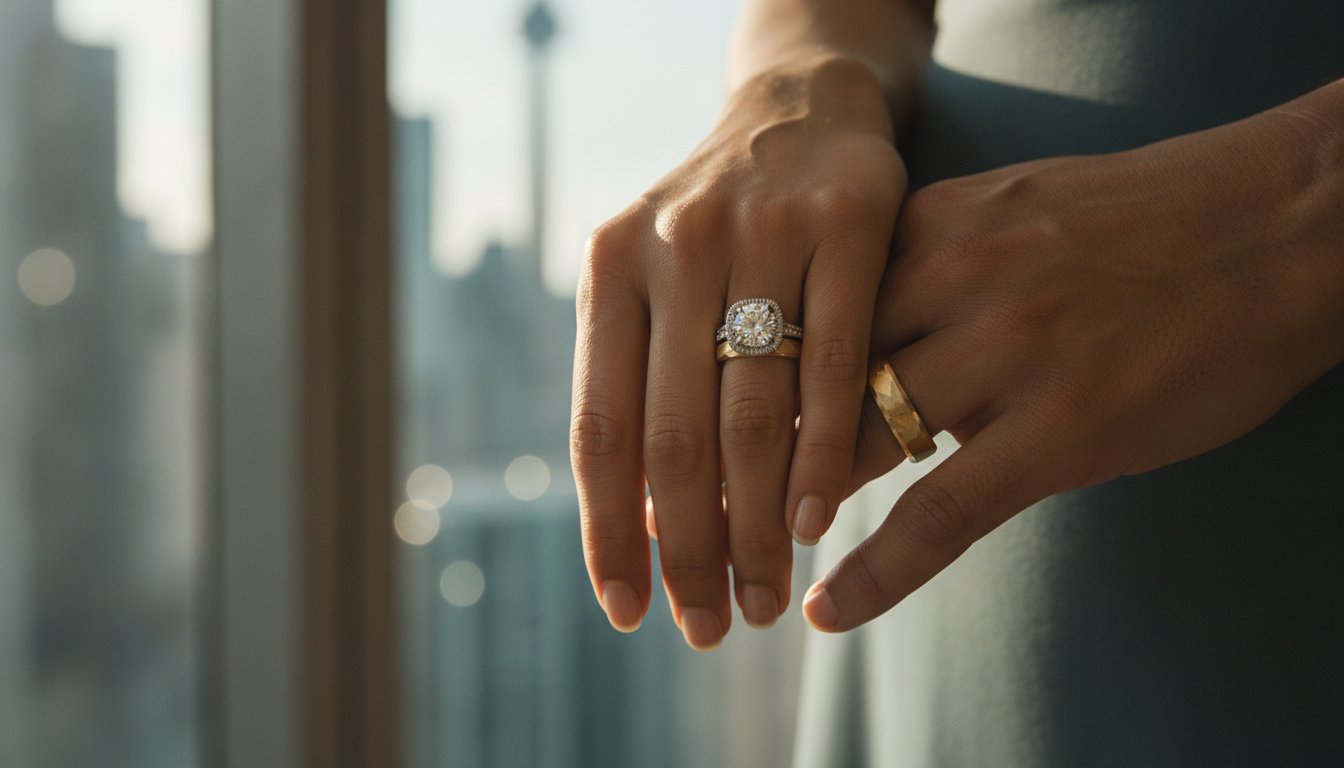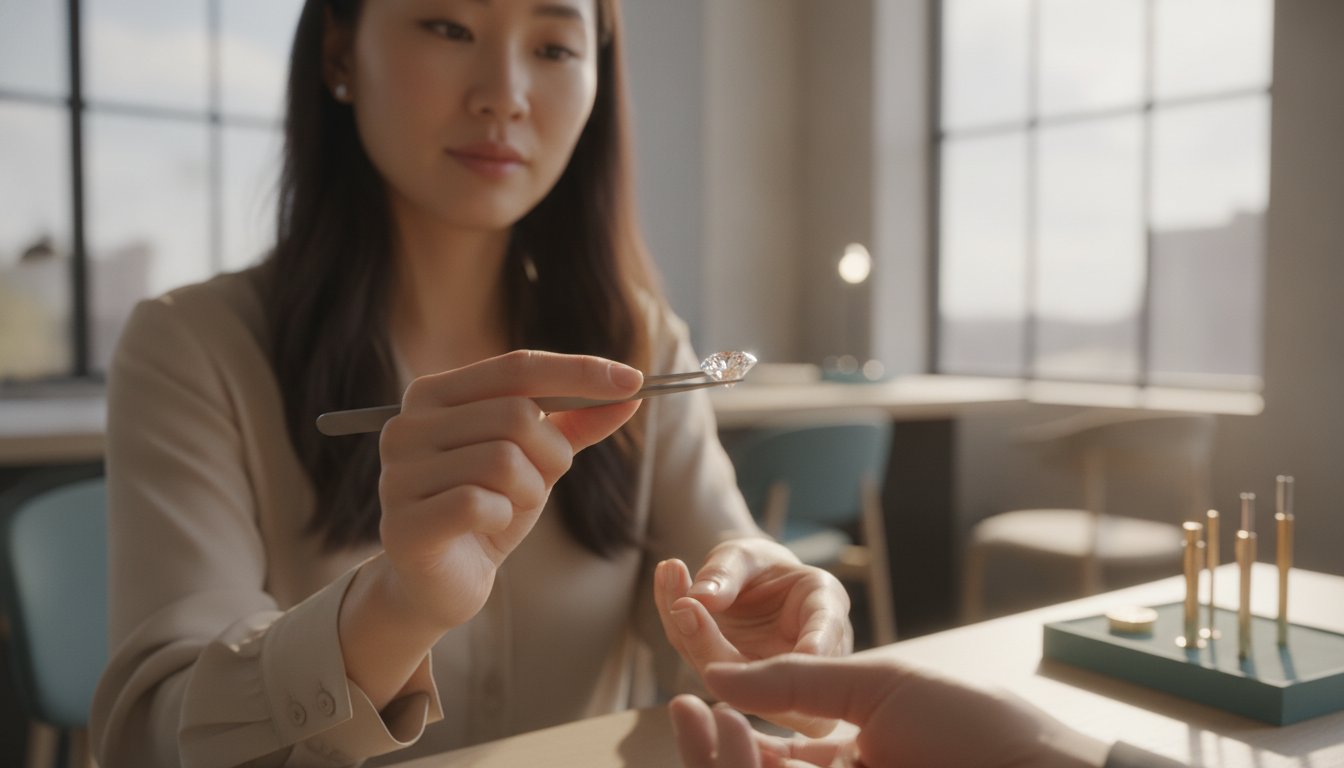
If you held a lab manufactured diamond next to a stone mined from the earth, even a seasoned gemologist couldn't distinguish between them without a specialized UV spectrometer. It's a bold reality that often surprises my clients when they first visit my downtown Toronto studio. I understand that choosing a stone for a custom engagement ring feels like a high-stakes decision. You might feel overwhelmed by technical specs or worry that a lab-grown option is somehow artificial. In my experience, these concerns vanish once you realize that these stones are physically and chemically identical to their natural counterparts.
I'm here to guide you through the technical reality and ethical benefits of lab manufactured diamonds. You'll learn the insider secrets to selecting an investment-grade stone, including the truth about CVD versus HPHT growth methods. My goal is to give you the confidence to choose a diamond that truly reflects your vision. We'll look at how master Canadian craftsmanship transforms a loose stone into a bespoke piece of jewellery that's built to last for generations.
• Realize why lab manufactured diamonds are chemically and physically identical to mined stones, offering the same lifelong durability and brilliance.
• Navigate the technical differences between CVD and HPHT growth methods to ensure you select a stone with superior clarity and structural integrity.
• Master the "cut-first" framework to maximize your budget by choosing a stone that prioritizes light performance over unnecessary colour grades.
• Identify the subtle visual flaws, like "milky" transparency, that distinguish an investment-grade stone from a mass-produced alternative.
• Learn how to collaborate with a master jeweller in Toronto to create a bespoke setting that enhances your diamond's unique proportions.
I often see a look of hesitation when a couple first visits my studio to discuss lab manufactured diamonds. There is a lingering myth that these stones are "fake" or "simulants." Let's clear that up immediately. A lab manufactured diamond is 100% pure carbon; it shares the exact chemical, physical, and optical properties of stones pulled from the earth. In my experience, the only meaningful difference is the point of origin. One is forged by the crushing pressure of the Earth's crust over billions of years, while the other is grown in a controlled laboratory environment.
A synthetic diamond is a marvel of human ingenuity that provides a conflict-free, sustainable luxury choice for modern couples. It is crucial to distinguish these from simulants like cubic zirconia or moissanite. Those materials are entirely different species with unique crystal structures and light refraction patterns. They don't possess the same hardness or brilliance. Here is the technical reality of what makes a lab diamond "real":
Both are composed of pure carbon (C).
Both share an isometric/cubic crystalline lattice.
Both measure at 2.417, which dictates that signature diamond sparkle.
Both score a 10 on the Mohs scale, the highest possible rating for durability.
Even a certified gemologist cannot distinguish between the two with a standard loupe. I use specialized equipment in my downtown Toronto studio to detect specific growth patterns that identify a stone's origin. For your daily life, the performance is identical. Because both stones score a 10 on the Mohs scale, they are durable enough for a lifetime of wear in an engagement ring. I’ll help you select a stone that fits your budget while maintaining the same fire and brilliance as a mined diamond. By choosing lab manufactured diamonds, you are investing in a stone that will never cloud, scratch, or lose its lustre.
When you look at the technical creation of lab manufactured diamonds, you'll find there are two primary methods used to grow these stones. While both result in a gem that is chemically identical to a natural one, the path they take affects the final character of the stone. Learn more about the science on our lab-grown diamonds page. In my experience, understanding these growth processes helps you make an informed choice for your custom piece. While both methods produce real diamonds, CVD is often preferred for larger, high-clarity investment-grade stones in 2026.
Chemical Vapour Deposition (CVD) starts with a thin diamond "seed" placed in a vacuum chamber. This chamber is filled with carbon-rich gas, like methane, which is then heated until the carbon atoms break away and layer onto the seed. This methodical growth allows for incredible control over the diamond's clarity, often resulting in fewer internal inclusions. Toronto couples are increasingly choosing CVD stones for custom emerald and oval cuts where clarity is paramount. Because these shapes have large, open facets, they don't hide imperfections well. This level of purity provides the perfect foundation for master Canadian craftsmanship in the final setting. I'll help you select a stone that fits your budget by focusing on these high-purity CVD options.
High Pressure High Temperature (HPHT) mimics the crushing pressure and intense heat of the Earth's crust to crystallize carbon. While this method is effective, it can sometimes result in a slight "blue nuance" or "boron tint" if the process isn't managed perfectly. I always vet stones for this during my private consultations at our downtown studio. You can read more about these nuances in my post: Are lab created diamond rings real? Debunking the myths. If you're curious about which method is right for your specific design, let's sit down and compare a few stones side by side.
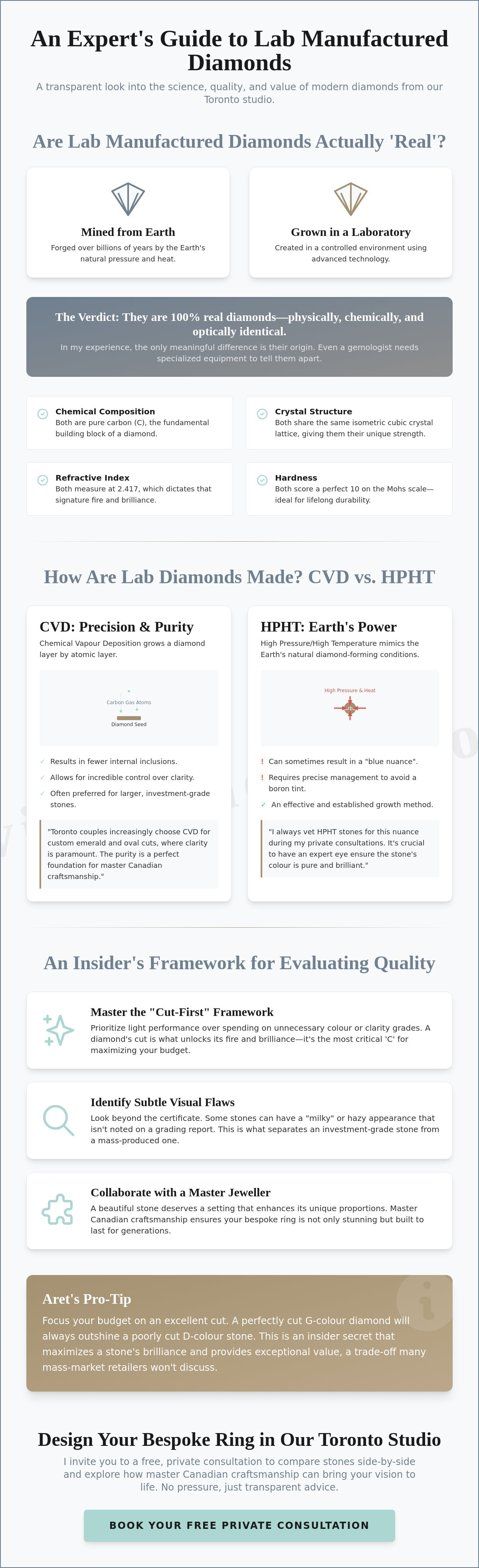
When evaluating the quality of lab manufactured diamonds, you shouldn't rely solely on the certificate. A certificate tells you the specs, but it doesn't describe the stone's life or "personality." Recent research into the quality of lab-grown diamonds confirms that these stones are reaching new heights in both size and clarity. However, master Canadian craftsmanship begins with selecting a stone that has no "fuzzy" or "milky" appearance. This is a common issue in lower-tier lab diamonds that many retailers overlook. In the 2026 GTA market, we are seeing a massive shift toward elongated cushions and radiant cuts. These shapes require a discerning eye to ensure the light return is even across the entire stone.
The cut determines the sparkle. A poorly cut lab diamond will look dull regardless of its carat weight or colour grade. I meticulously vet every stone to ensure it meets my standards for light return and symmetry. If a stone is cut too deep, it hides weight in the bottom where you can't see it; if it's too shallow, the light leaks out. Look for IGI or GIA certification to ensure the stone's grading is accurate and transparent. These labs are the gold standard for verifying that your investment-grade stone is exactly what the seller claims it to be.
Pro-Tip: In the lab-grown market, the price difference between a "D" and "F" colour grade is often negligible. I always advise my clients to prioritize "Excellent" or "Ideal" cuts over a perfect colour grade. Since lab manufactured diamonds are generally more affordable than mined ones, you can often reach for a higher carat weight without compromising on clarity. I’ll help you select a stone that fits your budget while maximizing the visual impact. For a deeper dive into local trends, check out my post: Lab grown diamonds Toronto: A guide to quality and value. If you want to see the difference between these grades in person, book a private consultation at my downtown studio.
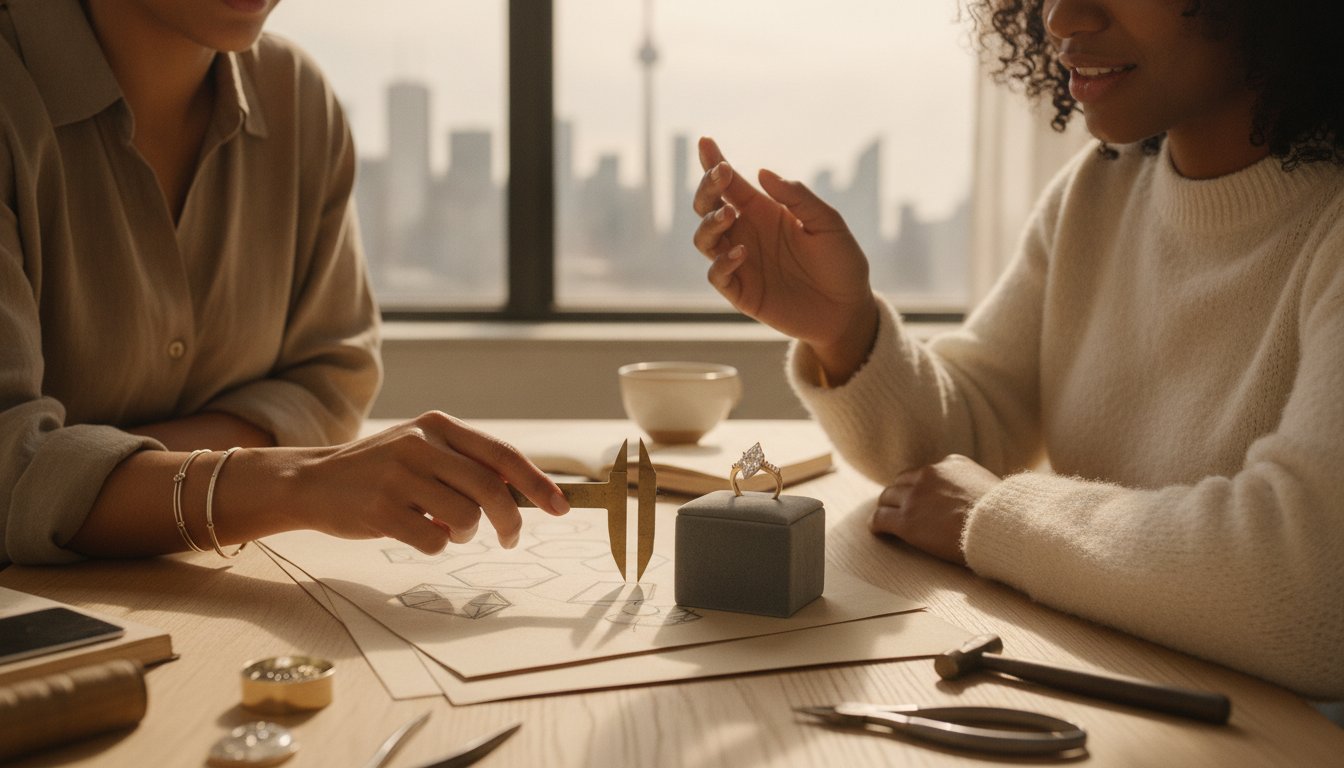
Your journey with lab manufactured diamonds doesn't end with selecting the perfect stone. While the diamond provides the brilliance, the setting is where master Canadian craftsmanship truly shines. At my downtown Toronto studio, we work one-on-one to ensure the ring's proportions perfectly complement your stone. Whether you envision a delicate hidden halo or a classic solitaire, the process is entirely collaborative and transparent. You can browse my gallery of custom diamond engagement rings to see how we balance modern stones with timeless design.
I've always believed that buying an engagement ring should be an educational masterclass rather than a high-pressure transaction. You should avoid the impersonal environment of typical retail jewellery stores where the focus is on a quick sale. During our sessions, we focus entirely on your vision. We'll look at stones under the loupe and discuss how different metals affect the stone's appearance. If you're ready to start, I'll help you select a stone that fits your budget while meeting my strict standards for light return. To get a better sense of our process, you can read about what to expect during your Livia Diamonds visit.
We specialize in handcrafted pieces that reflect your unique story. Every ring is made using investment-grade materials designed to last for generations. This commitment to quality comes from my family's deep roots in the industry. You can learn more about Aret and my third-generation heritage to see how we combine traditional techniques with modern lab manufactured diamonds. We don't just make rings; we create heirlooms that stand the test of time in the ever-evolving Toronto market.
Pro-Tip: When designing for a lab diamond, don't overlook the metal's structural integrity. Since these stones allow for larger carat weights, the setting needs to be robust. I recommend a platinum or 18k gold head for maximum durability, especially for elongated shapes like ovals or radiants that are popular in the GTA this year. Thinner bands are trendy, but they must be engineered correctly to support the stone's weight without warping over time.
If you're ready to explore the possibilities of a custom design, I invite you to a free private consultation at my downtown Toronto studio. Let's sit down together and bring your vision to life. Book your appointment today.
Choosing lab manufactured diamonds for your engagement ring is a decision that balances modern innovation with timeless beauty. We've explored how these stones are chemically identical to mined ones and why prioritizing an "Ideal Cut" ensures your investment-grade stone truly sparkles. My goal is to move beyond the confusion of technical specs and focus on the artistry of the final piece. In my experience, the right stone only reaches its full potential when it's paired with a setting designed specifically for its unique proportions.
I'll help you select a stone that fits your budget while ensuring it meets the high standards of master Canadian craftsmanship. As a third-generation master jeweller, I take pride in offering 5-star rated personalized consultations that retail stores simply can't match. We don't just sell rings; we collaborate on bespoke designs that reflect your personal story right here in the heart of the city. I look forward to meeting you and helping you create something truly extraordinary.
Book your free private consultation at our downtown Toronto studio to begin the process.
Resale value for lab manufactured diamonds is significantly lower than for natural stones; they typically retain only 10% to 30% of their original purchase price. In my experience, you should view these stones as an investment in your relationship and aesthetic vision rather than a financial asset. While natural diamonds hold value better over decades, the upfront savings on a lab stone allow you to prioritize master Canadian craftsmanship in the custom setting. Most of my Toronto clients find the immediate value in getting a larger, higher-quality stone for their budget far outweighs the long-term resale considerations.
You cannot tell the difference with the naked eye or even a standard jeweller's loupe. Specialized laboratory equipment is required to detect the specific growth patterns that distinguish the two. Most lab manufactured diamonds are laser-inscribed on the girdle with a report number and a "lab-grown" designation. I always show my clients these microscopic inscriptions at my downtown Toronto studio to ensure total transparency. This ensures you know exactly what you are purchasing before we begin the bespoke design process.
Lab-grown stones are generally a more sustainable choice because they eliminate the need for large-scale earth displacement and traditional mining. However, it's important to realize that the labs themselves require significant energy to mimic the Earth's natural pressure. Many modern facilities are now shifting toward renewable energy to reduce their footprint. If ethics and sustainability are your primary drivers, I'll help you select a stone that fits your budget while aligning with your personal values.
No, a true lab diamond will never get cloudy, yellow, or change colour over time. Because they are 100% carbon and score a 10 on the Mohs scale, they possess the same permanent durability as a mined stone. If you see a stone that has become dull or scratched, it is likely a simulant like cubic zirconia rather than a lab manufactured diamond. Our investment-grade stones are chemically identical to natural diamonds and are built to maintain their fire and brilliance for a lifetime.
Yes, it is absolutely possible to get a GIA-certified lab-grown diamond in Toronto. While the IGI was the early leader in grading these stones, the GIA is now a standard choice for investment-grade lab diamonds in the 2026 market. I always recommend choosing a stone with a report from one of these two reputable institutions. This ensures the grading for colour, clarity, and cut is accurate and unbiased, giving you peace of mind in your purchase.

© Copyright 2023 Livia Diamonds. All Rights Reserved